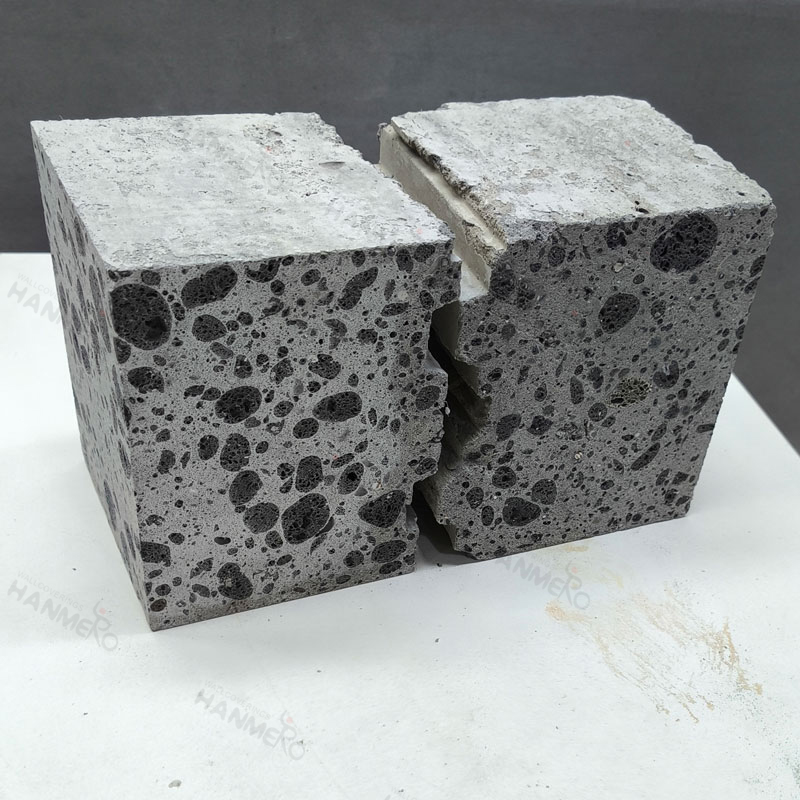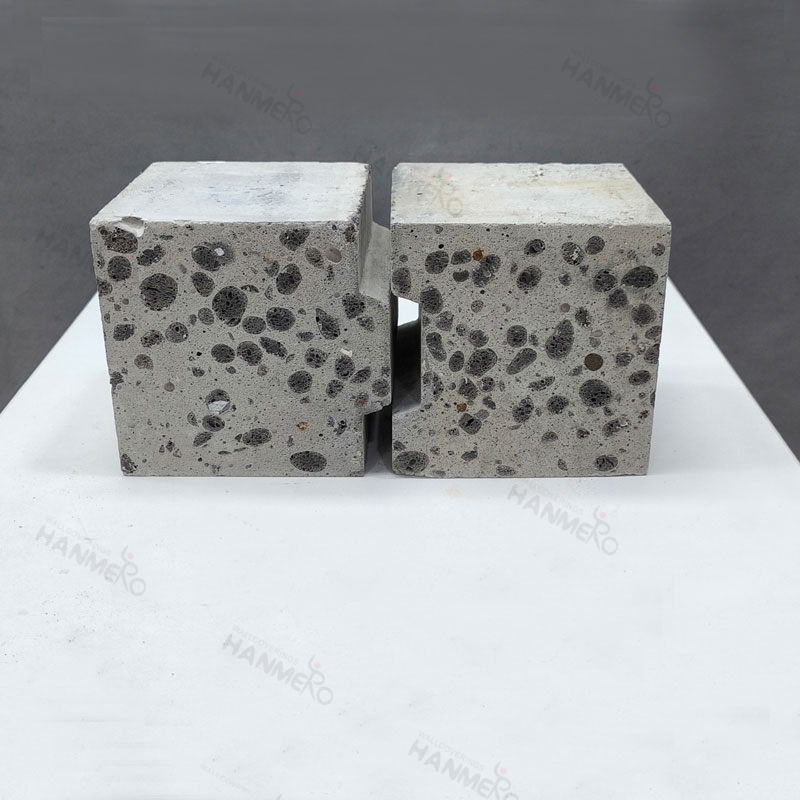
When selecting building envelope materials, many engineering teams will compare ceramsite panels with traditional concrete wall panels in detail, and the performance differences between the two are very obvious. In terms of self-weight, the density of ceramsite panels is much lower than that of ordinary concrete wall panels, which can significantly reduce the overall dead load of the building. This difference means that the foundation design of the building can adopt a lighter scheme, the load-bearing pressure of the main structure is reduced, and the safety redundancy of the entire building in the face of earthquake action is also improved accordingly.
In terms of thermal insulation performance, ceramsite panels have a clear advantage over traditional solid concrete wall panels. The porous structure of ceramsite particles makes the thermal conductivity of ceramsite panels far lower than that of ordinary concrete. Under the same wall thickness, the thermal insulation effect of ceramsite panels is much better, which can effectively reduce the energy consumption of building heating and cooling. Traditional concrete wall panels usually need to be added with additional external thermal insulation layers to achieve the same energy-saving effect, which increases the complexity and cost of construction.
In terms of construction and later maintenance, ceramsite panels also show more convenience. Its lightweight characteristics make hoisting and installation faster, and the flat surface after factory prefabrication can directly carry out subsequent decoration operations. Traditional concrete wall panels are heavy and difficult to handle, and the on-site leveling and plastering workload is large. In terms of long-term use, ceramsite panels have good waterproof and freeze-thaw resistance, which can maintain stable performance in different climate environments and reduce the risk of wall cracking and seepage.